Farmhouse Kitchen Decor: 5 Stunning Ideas
Farmhouse kitchen decor offers a timeless appeal, blending rustic charm with modern functionality. It’s a style that emphasizes warmth, simplicity, and a connection to nature, creating a welcoming and inviting space for cooking, dining, and gathering. This guide explores five key ideas to help you transform your kitchen into a stunning farmhouse haven. From embracing natural materials to incorporating vintage finds, these suggestions will inspire you to create a kitchen that reflects your personal style and the enduring beauty of farmhouse design. Whether you’re undertaking a complete renovation or simply looking to refresh your space, these ideas provide a solid foundation for achieving the farmhouse kitchen of your dreams.
Embrace Natural Materials
The cornerstone of farmhouse style lies in its use of natural materials. These elements bring warmth, texture, and a sense of authenticity to your kitchen. Incorporating these materials creates a connection to the outdoors and a feeling of groundedness, key aspects of the farmhouse aesthetic. Think about the surfaces that define your kitchen and how natural materials can be incorporated. They are not only beautiful but also durable and contribute to the overall character of your space. This element is essential for creating a true farmhouse feel.
Wooden Countertops

Wooden countertops provide a warm and inviting surface for food preparation and dining. Choose from a variety of wood types, such as butcher block, reclaimed wood, or more durable hardwoods. The natural variations in the wood grain add character and charm. Proper sealing and maintenance are essential to protect the wood from moisture and damage, ensuring its longevity and beauty. Wooden countertops pair beautifully with farmhouse sinks and neutral cabinetry, creating a cohesive and visually appealing design. Consider the type of wood and finish that best suits your lifestyle and the overall aesthetic of your kitchen. (image: farmhouse-kitchen-wooden-countertops.webp)
Exposed Wooden Beams
Exposed wooden beams are a classic farmhouse element, adding architectural interest and a touch of rustic elegance. They create a sense of height and space, while also contributing to the warmth and character of the room. If your kitchen doesn’t have existing beams, consider adding faux beams or cladding existing ceiling structures with wood. Choose a wood type and finish that complements your cabinetry and overall design. The beams can be stained, painted, or left in their natural state, depending on your preference. (image: farmhouse-kitchen-exposed-beams.webp)
Stone or Brick Accents
Stone or brick accents add texture and visual interest, grounding the space and reinforcing the connection to nature. Consider incorporating a brick backsplash, a stone accent wall, or a stone-clad island. These elements can add a layer of sophistication and authenticity to the kitchen. Ensure the stone or brick complements the other materials and colors in your kitchen. The use of these materials provides a tactile and visually appealing experience, creating a cozy and inviting atmosphere. The options are extensive, and selecting a material that meets your style is key.
Incorporate Vintage Finds

Vintage finds add character and personality to your farmhouse kitchen. They tell a story and inject a unique charm that new items often lack. Antique pieces, inherited treasures, and flea market discoveries are perfect for creating an authentically lived-in feel. This adds a unique element to your kitchen, moving away from a generic look and turning it into a personalized space that reflects your interests and the history of the home.
Antique Lighting Fixtures
Antique lighting fixtures, such as pendant lights, chandeliers, or sconces, can instantly elevate the style of your kitchen. Look for fixtures with unique shapes, materials, and finishes. Consider using Edison bulbs to enhance the vintage aesthetic. Antique lighting adds warmth, character, and a touch of history to your space. Ensure the lighting fixtures are functional and provide adequate illumination for your kitchen tasks, such as cooking and prepping. (image: farmhouse-kitchen-vintage-lighting.webp)
Repurposed Furniture
Repurposed furniture, such as a vintage table used as an island or a hutch for storage, adds character and functionality. Consider refinishing or restoring old pieces to suit your kitchen’s color palette. Look for unique pieces that can serve multiple purposes. Repurposed furniture adds a layer of history and individuality, making your kitchen feel less generic. This also helps to maintain sustainability through upcycling and repurposing existing items rather than purchasing new ones. (image: farmhouse-kitchen-repurposed-furniture.webp)
Vintage Kitchenware

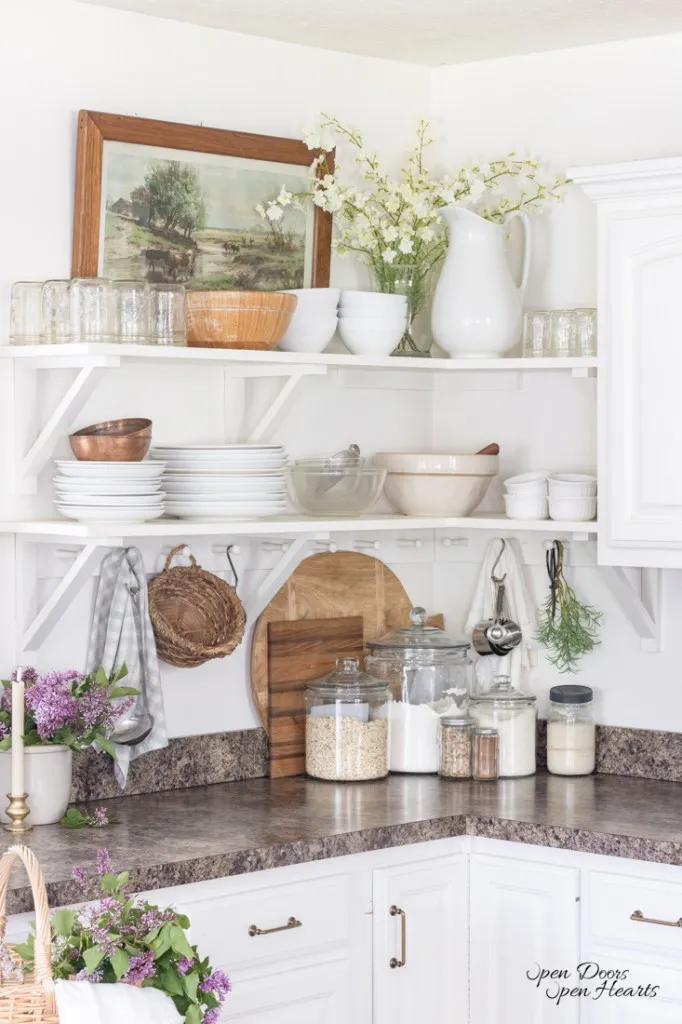
Vintage kitchenware, such as enamelware pots, ceramic bowls, and cast iron skillets, adds charm and functionality. Display your vintage kitchenware on open shelving or countertops to create a visually appealing focal point. Look for pieces with interesting patterns, colors, and designs. Mixing and matching vintage kitchenware adds personality and a sense of history to your kitchen. Not only are these pieces beautiful, but they often have a superior build quality compared to their modern counterparts, making them functional and long-lasting.
Choose a Neutral Color Palette
A neutral color palette forms the foundation of a classic farmhouse kitchen, creating a sense of calm, spaciousness, and versatility. This approach allows you to easily incorporate accent colors and natural materials. Neutral colors are also timeless, ensuring your kitchen design remains stylish for years to come. This is the most important part of the process to have a well balanced look.
Creamy Whites and Soft Grays
Creamy whites and soft grays are the quintessential colors of the farmhouse style. They create a clean, bright, and inviting atmosphere. These colors provide a perfect backdrop for wood tones, natural textures, and pops of color. Consider using these colors for your cabinetry, walls, and trim. The use of light colors makes the kitchen feel more spacious and airy, and they also reflect natural light, creating a brighter and more welcoming space. (image: farmhouse-kitchen-neutral-palette.webp)
Accent Colors

Accent colors can be introduced through textiles, accessories, and artwork. Consider using colors like soft blues, greens, or yellows to add warmth and personality. These accent colors can also be incorporated through the use of vintage items or unique design choices. The accent colors should complement the neutral base, creating a cohesive and balanced design. Use pops of color to add personality, prevent the space from feeling too bland.
Add Rustic Elements
Rustic elements are essential for achieving the authentic farmhouse look. These elements enhance the warmth, texture, and character of the kitchen, contributing to its overall charm. Rustic details can be incorporated in many ways, whether through practical storage solutions or decorative items. These details enhance the lived-in feel and create a more welcoming atmosphere.
Open Shelving
Open shelving provides a practical and visually appealing storage solution. Display your favorite dishware, cookbooks, and decorative items on open shelves. Open shelving adds a touch of rustic charm and allows you to showcase your personal style. Choose shelves made from reclaimed wood or other natural materials to enhance the farmhouse aesthetic. Make sure that you have the items that you want to showcase for a well-balanced presentation. (image: farmhouse-kitchen-open-shelving.webp)
Farmhouse Sink

A farmhouse sink, also known as a apron-front sink, is a defining feature of farmhouse kitchens. It adds a touch of rustic elegance and provides ample space for washing dishes. Choose a sink made from porcelain, fireclay, or stainless steel. The farmhouse sink is not only functional but also serves as a focal point in the kitchen. Its timeless design and practical nature make it a perfect choice for the farmhouse aesthetic. (image: farmhouse-kitchen-farmhouse-sink.webp)
Consider Textures
Texture plays a crucial role in farmhouse kitchen decor, adding depth, visual interest, and a sense of warmth. Combining different textures creates a layered and inviting space. This is an easy way to add visual depth and dimension, which in turn prevents your kitchen from appearing flat or uninspired. The use of textures enhances the overall farmhouse style and makes the space more welcoming.
Woven Baskets
Woven baskets are a versatile and practical storage solution. Use them to store fruits, vegetables, or kitchen utensils. Woven baskets add a touch of rustic charm and introduce natural textures to your kitchen. Consider using baskets in various sizes and shapes to create visual interest. Place them on open shelves, countertops, or under the sink to enhance both the aesthetic and functionality of the space. (image: farmhouse-kitchen-woven-baskets.webp)
Linen Curtains

Linen curtains add a touch of softness and elegance to your kitchen. Choose curtains in natural colors, such as white, cream, or light gray. Linen curtains allow natural light to filter through while still providing privacy. They add a layer of texture and visual appeal to your kitchen. These are also very cost-effective for changing the entire look of your kitchen.
In conclusion, creating a farmhouse kitchen is all about embracing natural materials, incorporating vintage finds, choosing a neutral color palette, adding rustic elements, and considering textures. By incorporating these five ideas, you can transform your kitchen into a welcoming and stylish space that reflects the enduring charm of farmhouse design. Remember to personalize your space, and make it a place where you love to spend time.