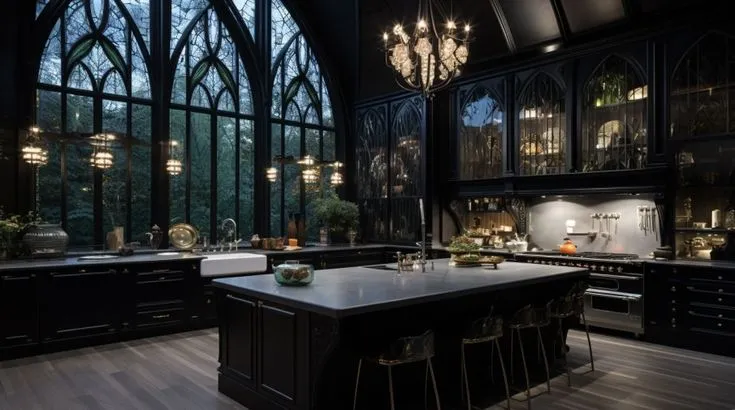
Embracing Gothic Kitchen Decor
Gothic kitchen decor represents a fascinating blend of historical elegance and modern design. It’s a style that embraces dark, rich colors, ornate details, and a sense of drama, creating a unique and captivating space. Unlike the typical bright and airy kitchens often seen today, a gothic kitchen offers a moody and atmospheric experience. This guide delves into the key elements and ideas to help you transform your kitchen into a stunning gothic-inspired haven. By understanding the core components, you can create a space that is both visually striking and functional, reflecting your unique style and appreciation for the gothic aesthetic. Get ready to explore how to infuse your kitchen with the mystique and grandeur of gothic design!
Dark Color Palette
The foundation of any gothic kitchen is its color palette. Deep, saturated hues are essential for setting the mood. Think of colors like black, deep charcoal, burgundy, forest green, and navy blue. These colors create a sense of depth and mystery, which is central to the gothic aesthetic. While a monochromatic scheme can be effective, consider incorporating metallic accents like gold, silver, or bronze to add visual interest and a touch of luxury. These metallic touches can be introduced through hardware, lighting fixtures, or decorative accessories, providing a beautiful contrast to the dark base colors. Don’t be afraid to experiment with different shades and tones to find the perfect balance that suits your personal style and the overall feel you want to achieve.
Choosing the Right Dark Colors

When selecting dark colors for your gothic kitchen, it’s crucial to consider the lighting. Dark colors can absorb light, making a space feel smaller if not balanced correctly. To combat this, ensure your kitchen has ample lighting, both natural and artificial. Use matte finishes to minimize reflections and create a more subdued atmosphere. Consider using a combination of colors to add depth and dimension. For example, you might choose black for the cabinetry, charcoal for the walls, and burgundy for the backsplash. This layering effect will create visual interest and prevent the space from feeling flat. Always test paint samples in your kitchen to see how the colors appear under different lighting conditions before making a final decision. This will help you choose the right shades that work well in your space.
Incorporating Gothic Inspired Cabinetry
Cabinetry is a major element in a gothic kitchen, setting the tone for the entire space. Opt for cabinets with intricate details, such as raised panels, arched doors, or decorative molding. Dark-stained wood is a classic choice, providing a rich and luxurious feel. Consider using a combination of open shelving and closed cabinets to display your favorite gothic-inspired décor items. Open shelving can also help break up the visual weight of the dark cabinets. Hardware plays a significant role in enhancing the gothic aesthetic. Look for ornate handles, pulls, and knobs in materials like wrought iron, antique brass, or pewter. These details will add a touch of elegance and sophistication to your cabinetry, complementing the overall gothic theme. The right cabinetry will provide both functionality and a strong visual impact.
Cabinet Styles and Finishes
Explore various cabinet styles to find the perfect fit for your gothic kitchen. Consider styles like traditional raised-panel cabinets for a classic gothic look. If you prefer a more modern interpretation, opt for sleek, flat-panel cabinets in a dark color. Finishes such as matte, satin, or even high-gloss can be used depending on the desired effect. Matte finishes will create a more subdued and atmospheric ambiance, while satin and high-gloss finishes will reflect light, adding a touch of glamour. When choosing finishes, also consider the durability and maintenance requirements. Dark-colored cabinets can show dust and fingerprints more easily, so choose a finish that is easy to clean and maintain. Combining different styles and finishes can create a unique and visually appealing kitchen design. Mixing sleek modern cabinets with ornate details can add a contemporary twist to the gothic theme.
Adding Gothic Hardware

Hardware is a small detail that can make a big impact in a gothic kitchen. Ornate pulls and knobs in unique shapes and materials are essential for creating the desired aesthetic. Wrought iron is a classic choice, offering a rugged and authentic gothic feel. Antique brass or pewter can add a touch of elegance and sophistication. When selecting hardware, consider the overall style of your kitchen. If you have traditional cabinetry, opt for hardware with intricate details and carvings. If you have modern cabinets, choose hardware with a simpler design. The hardware should complement the style of your cabinets and the overall gothic theme. Mixing and matching different hardware can also add visual interest. Experiment with different materials and finishes to create a unique and personalized look. Hardware is an opportunity to showcase your personality and add the final touches that define your gothic kitchen.
Selecting Gothic Hardware
When selecting hardware, consider the size and style of your cabinets. Larger cabinets can handle larger, more ornate pulls, while smaller cabinets may look better with smaller, more subtle knobs. Ensure that the hardware you choose is functional and easy to use. Consider the finish of the hardware. Wrought iron offers a rustic and aged appearance, while antique brass adds a touch of elegance. Pewter provides a more modern, yet still gothic, look. The finish should complement the color of your cabinets and the overall color scheme of your kitchen. Don’t be afraid to mix and match different types of hardware to add visual interest. For example, you might use pulls on drawers and knobs on cabinets. The key is to find hardware that is both aesthetically pleasing and practical.
Lighting Fixtures to Enhance the Gothic Vibe
Lighting is crucial in a gothic kitchen, not only for functionality but also for setting the mood. Choose fixtures that reflect the gothic aesthetic. Chandeliers with intricate details, wrought iron pendants, and sconces with dark, dramatic shades are all excellent choices. Consider using dimmable lights to create a more atmospheric ambiance. Layer the lighting by incorporating different types of fixtures, such as overhead lights, task lights, and ambient lights. This will allow you to control the lighting levels and create a space that is both functional and visually appealing. The use of candles, both real and LED, can also enhance the gothic ambiance. Place candles on countertops, shelves, and in lanterns to add a warm and inviting glow. Lighting is one of the most essential elements of gothic design, so choose fixtures that complement the overall theme.
Choosing the Right Lighting

When selecting lighting fixtures, consider the overall style of your kitchen. If you prefer a more traditional gothic look, opt for chandeliers with ornate details and crystal accents. For a more modern interpretation, choose pendants with clean lines and dark metal finishes. Ensure that the lighting is functional and provides adequate illumination for tasks such as cooking and cleaning. Consider the color temperature of the light bulbs. Warm white light bulbs will create a more inviting and cozy atmosphere, while cool white light bulbs will provide a brighter and more functional light. Layer your lighting by combining different types of fixtures. For example, you might use overhead lights for general illumination, task lights over the countertops, and ambient lights in the form of sconces or candles. Don’t forget to incorporate dimmer switches to control the lighting levels and create a more atmospheric ambiance. The right lighting will transform your kitchen and enhance the gothic aesthetic.
Decorating with Gothic Accents and Accessories
Accessories and accents are key to bringing the gothic theme to life. Incorporate items such as ornate mirrors, antique candlesticks, and gothic-inspired artwork. Display dark-colored dishware and glassware on open shelves. Consider adding a dramatic backsplash made of dark-colored tiles or stone. Textiles can also enhance the gothic feel, such as velvet curtains, dark-colored tablecloths, or patterned runners. Adding vintage or antique items, such as a wrought iron pot rack or an old wooden table, can add authenticity and character to your kitchen. Don’t be afraid to experiment with different textures and materials. Combine smooth surfaces with rough textures to create a visually interesting space. These details will contribute to the overall aesthetic, bringing the gothic theme to the forefront and making your kitchen a truly unique and captivating space.
Accents & Accessories to Consider
When selecting accents and accessories, focus on items that reflect the gothic aesthetic. Consider adding gothic-inspired artwork to the walls, such as portraits, landscapes, or abstract pieces with dark colors. Antique candlesticks and candelabras are classic choices, adding a touch of elegance and mystery. Display dark-colored dishware and glassware on open shelves. Consider adding a dramatic backsplash made of dark-colored tiles or stone. Textiles can also enhance the gothic feel, such as velvet curtains, dark-colored tablecloths, or patterned runners. Mixing and matching different types of accents and accessories can add visual interest and create a unique and personalized look. Don’t be afraid to experiment with different items to find the perfect combination. The right accents will enhance the gothic atmosphere and complete your kitchen design.
Adding Statement Pieces

Statement pieces are the focal points of your gothic kitchen, adding drama and character. Consider a large, ornate mirror with a dark frame, placed strategically to reflect light and enhance the sense of space. An antique dining table with carved details can serve as a beautiful centerpiece. If you have the space, consider a gothic-inspired island with a dark countertop and intricate base. A dramatic range hood made of dark metal can also serve as a statement piece. Choose items that reflect your personal style and preferences. The statement pieces should complement the overall gothic theme. Make sure that the statement pieces are functional and practical, as well as aesthetically pleasing. Statement pieces are essential for creating a captivating and unforgettable gothic kitchen.
Integrating Gothic Elements into Modern Design
Modern gothic design is a beautiful blend of old and new. It involves incorporating gothic elements into a contemporary space. This fusion balances the drama of gothic design with the clean lines and functionality of modern design. Use dark colors, ornate details, and dramatic lighting while maintaining the sleek simplicity of modern cabinetry and appliances. This creates a balanced aesthetic that is both visually appealing and functional. Consider using dark-colored cabinetry with modern hardware. Incorporate gothic-inspired accents, such as an ornate mirror or antique candlesticks. The goal is to create a space that reflects your personality. This approach provides a unique and stylish space.
Balancing Gothic with Modern Features
To balance gothic elements with modern features, start by choosing a neutral base. Use dark colors sparingly, as accent colors against a backdrop of neutral tones. Incorporate modern cabinetry with clean lines and simple hardware. Use gothic-inspired accents, such as an ornate mirror or antique candlesticks, to add drama. Choose lighting fixtures that complement both styles. A modern pendant light with a dark finish can be an effective choice. Mix different textures and materials to add visual interest. Pair smooth surfaces with rough textures. The key is to create a cohesive and balanced design that reflects both gothic and modern styles. This approach will give you the best of both worlds, creating a unique and stylish kitchen.
The Influence of Gothic Kitchens

Gothic kitchens are a bold and inspiring design choice. They offer a unique alternative to the often-seen bright and minimalist kitchens. The aesthetic creates a space that is both visually striking and emotionally resonant. It’s a style that allows homeowners to express their personality and appreciate the beauty of historical design. Whether you’re drawn to the dark and dramatic color palettes, the intricate details of the cabinetry, or the atmospheric lighting, a gothic kitchen can be a truly captivating space. By embracing these elements, you can create a kitchen that reflects your unique style and provides a daily experience. Gothic kitchens show the influence of history and design and show the lasting power of this timeless aesthetic.