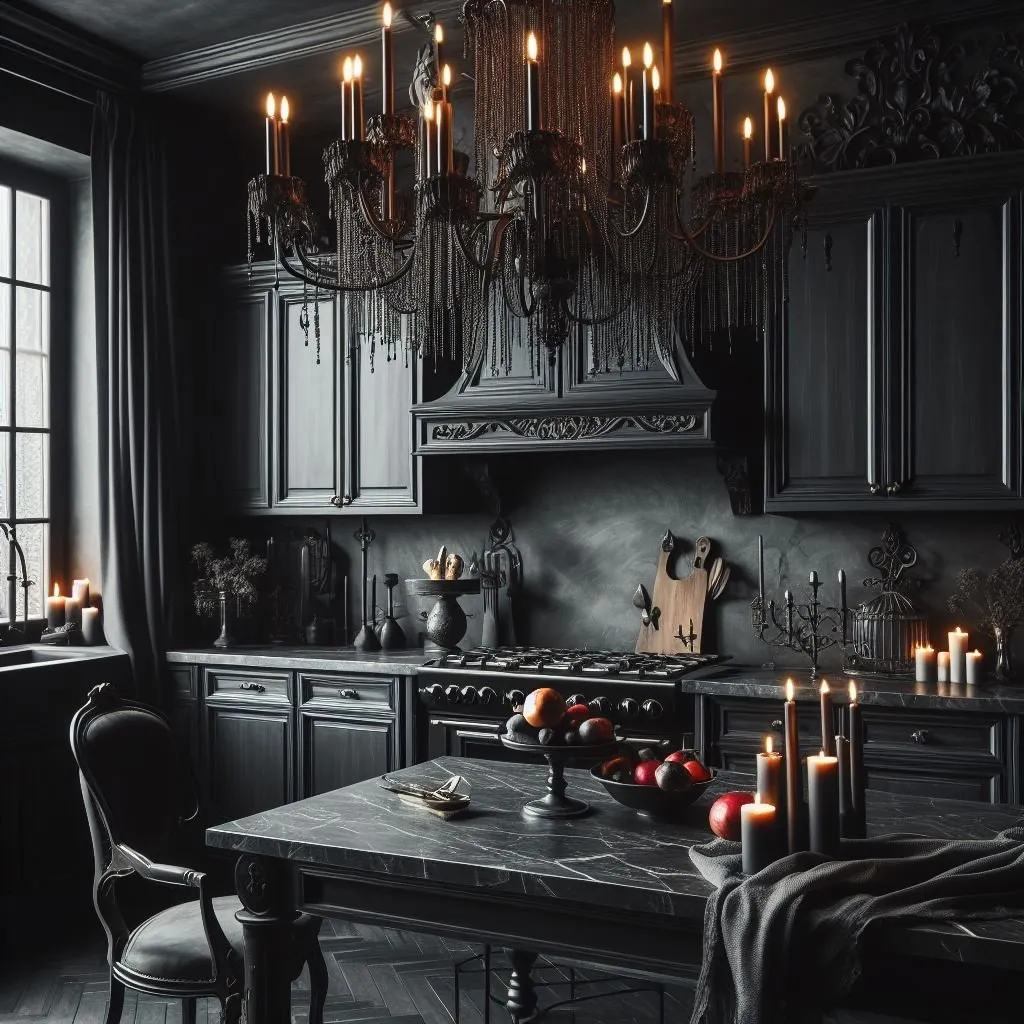
Embracing Gothic Kitchen Decor
Gothic kitchen decor is more than just a design style; it’s an experience. It’s about creating a space that evokes a sense of mystery, elegance, and timelessness. It’s a bold choice, one that moves away from the often-sterile environments of modern kitchens and embraces the drama and richness of a bygone era. This style is characterized by its dark color palettes, ornate details, and dramatic lighting, all working in harmony to create a truly enchanting atmosphere. It’s a place where shadows dance, and every element, from the cabinets to the accessories, tells a story. The goal is to transform your kitchen into a haven, a place that reflects your personality and offers a unique and captivating ambiance. In a gothic kitchen, everyday tasks become rituals, and cooking becomes an art form.
Dark Color Palettes for Gothic Kitchens
The foundation of a gothic kitchen’s allure lies in its color palette. Think deep, rich, and evocative hues that create a sense of drama and mystery. The most common colors are those that are reminiscent of the night, the depths, and the shadows that lurk in the shadows. This is not a space for light and airy colors; it’s about embracing the darkness and letting it envelop the space. Dark colors are the core of gothic decor. This creates a strong and unforgettable first impression and sets the stage for the other design elements that will follow. The colors you choose will set the mood and atmosphere, so think about the experience you want your kitchen to provide. Will it be an intimate space for culinary experiences? Or a dramatic backdrop for evening entertainment? The right colors can enhance both.
Deep and Dramatic Hues

Consider colors such as deep reds, such as burgundy or crimson. These shades add a touch of regal opulence and can be used on the walls, cabinetry, or even as accents in the space. Think about the use of deep blues and purples, reminiscent of twilight skies or amethyst gems. These colors can introduce a sense of mystery and sophistication to your kitchen. For those who are bold, emerald green is a great option. These rich colors create a sophisticated and welcoming atmosphere. When combining these colors, keep in mind that this will set the tone of your kitchen, and it’s important to choose colors that work well together.
Consider Black and Charcoal
Black and charcoal are the staples of gothic design, adding an air of elegance and mystery to the space. They can be used on the walls, cabinets, and even the countertops to create a dramatic effect. Black is often the choice for those who are serious about gothic style and want to fully immerse themselves in the aesthetic. Black cabinets and walls are the most dramatic, while charcoal is slightly softer, and therefore, a little more accessible for those who are not sure whether they’re ready for a fully gothic design. Black and charcoal also work well with other gothic elements, such as the iron hardware and ornate fixtures. When using black and charcoal, it is important to consider the lighting, as these colors can make the space feel small and dim if it is not properly illuminated.
Accent Colors in Gothic Kitchens
Accent colors help to break up the darkness and add a touch of personality to the space. Gold and silver are classic gothic accent colors, adding a touch of elegance and sophistication. Use them on the hardware, fixtures, or even as decorative elements. Deep jewel tones, such as ruby, emerald, and sapphire, can be used to add pops of color and create a sense of drama. You can add these in decorative pieces, such as your choice of accessories. The key is to choose accent colors that complement the overall color palette and enhance the gothic aesthetic. When selecting these accent colors, take the time to consider how these colors will interact with the dark base colors of your gothic kitchen.
Incorporating Gothic Furnishings

Gothic furnishings play a vital role in creating an authentic gothic kitchen. Look for furniture that features ornate details, such as carvings, arches, and pointed shapes. These details are reminiscent of Gothic architecture and add to the overall gothic aesthetic. The key is to choose furniture that complements the color palette and the other design elements in the kitchen. Consider the size and scale of the furniture, as gothic furniture tends to be heavy and substantial. Be sure to leave enough space for movement and comfort and avoid overcrowding the space. It’s essential that the space is functional as well as beautiful.
Ornate Cabinetry and Detailing
Cabinetry is the focal point of a gothic kitchen, so choose cabinets with ornate details. Look for cabinets with raised panels, carved designs, and arched doors. Dark wood or metal finishes are ideal, and they will add a touch of elegance and mystery. You can also use decorative molding and trim to enhance the gothic aesthetic. Consider using a combination of materials, such as wood and metal, to create a rich and visually interesting effect. The details of the cabinets will make a bold statement, and this is the perfect area to express the true gothic aesthetic. This is the center of your gothic kitchen.
Choose Dark Wood or Metal
Dark wood and metal are the best choices for the gothic kitchen. Dark wood provides a sense of warmth and richness, while metal adds a touch of industrial edge. Choose wood finishes, such as walnut or mahogany, for the cabinets and furniture. These are timeless, classic choices that provide a sense of luxury. Consider using metal accents, such as iron or bronze, for the hardware, fixtures, and decorative elements. Metal can add a touch of edge and create a contrast with the wood finishes. By carefully considering materials, the space will reflect your personal style, as well as the gothic style.
Gothic Lighting Fixtures

Lighting is crucial in a gothic kitchen, and it is used to create a sense of drama and mystery. The lighting fixtures should be ornate and dramatic, complementing the other design elements in the kitchen. Chandeliers and sconces are the most popular choices, and they are ideal for creating a warm and inviting atmosphere. Dim lighting is the key to creating a gothic atmosphere. The lighting should be soft and diffused, and it should cast shadows on the walls and ceiling. Use dimmers to adjust the brightness and create the perfect ambiance. The right lighting can completely transform your kitchen.
Chandeliers and Candle-Style Lighting
Chandeliers are a staple in gothic design, and they are ideal for adding a touch of elegance and luxury to the kitchen. Look for chandeliers with intricate designs, such as crystal or wrought iron. Candle-style lighting fixtures are another popular choice, and they are ideal for creating a warm and inviting atmosphere. These can be used as the main source of light or as accents. Consider using a combination of both to create a layered lighting effect. Be sure to choose fixtures that complement the color palette and the other design elements in the kitchen. With chandeliers and other lighting pieces, your kitchen will stand out.
Dim Lighting and Shadows
Dim lighting is key to creating a gothic atmosphere. Use dimmers to adjust the brightness and create the perfect ambiance. Use soft and diffused lighting, avoiding harsh, direct light. This will help to create a sense of mystery and drama. Use shadows to enhance the gothic aesthetic. Shadows can be created using strategically placed lighting fixtures or decorative elements. By focusing on dim lighting and shadows, you can ensure that your gothic kitchen has the perfect ambiance.
The Role of Gothic Accessories

Accessories are what truly bring the gothic kitchen to life. Use them to add personality and style to the space. This is your opportunity to add touches that make the kitchen feel like your own. The accessories should complement the overall design, and they should be carefully selected to create a cohesive look. Consider using antique mirrors, ornate candlesticks, and gothic artwork to add a touch of elegance and mystery. The details are everything. The right accessories can make all of the difference when creating your gothic kitchen.
Embrace Gothic Artwork
Artwork is a great way to add a touch of personality and style to the kitchen. Look for artwork that reflects the gothic aesthetic, such as portraits, landscapes, or abstract pieces. Choose artwork that complements the color palette and the other design elements in the kitchen. Consider using antique frames and ornate mirrors to enhance the gothic aesthetic. Artwork is a key accessory to help convey the gothic aesthetic. You can choose pieces that reflect the era. The art will speak volumes about your gothic preferences.
Gothic Kitchen Textiles
Textiles can be used to add a touch of warmth and texture to the kitchen. Choose textiles that reflect the gothic aesthetic, such as velvet, silk, and brocade. Use them for curtains, tablecloths, and chair cushions. Consider using dark colors, such as black, burgundy, or emerald green, to complement the overall color palette. The right fabrics will add a level of sophistication and elegance. This is a great way to add texture.
Embrace Gothic Kitchen Hardware

Hardware is a crucial element in gothic design, and it can make a big difference in the overall look and feel of the kitchen. Look for hardware that features ornate details, such as carvings, arches, and pointed shapes. Consider using a combination of materials, such as metal and wood, to create a rich and visually interesting effect. The right hardware will enhance the gothic aesthetic.
Knobs and Pulls
Knobs and pulls are essential elements of the gothic kitchen. Look for knobs and pulls with ornate details, such as carvings, arches, and pointed shapes. Consider using metal knobs and pulls, such as iron or bronze, to add a touch of elegance and sophistication. The right hardware will complement the overall design and enhance the gothic aesthetic. The right choice can add a real touch of personality.
Accessorizing the Gothic Kitchen
Accessorizing is the final touch in creating your gothic kitchen. Choose accessories that complement the overall design and enhance the gothic aesthetic. Consider using antique mirrors, ornate candlesticks, and gothic artwork to add a touch of elegance and mystery. The details are everything when creating a gothic kitchen, so don’t be afraid to experiment. With the right accessories, the kitchen will be sure to please and capture the imagination of all those who enter. The devil is in the details.
Gothic Kitchen Decor: In Conclusion

Creating a gothic kitchen is a journey into a world of mystery, elegance, and timelessness. By embracing dark color palettes, incorporating ornate furnishings, and selecting the right accessories, you can transform your kitchen into a captivating and enchanting space. It’s a style that invites you to slow down, savor the moment, and appreciate the beauty of the past. With these seven steps, your kitchen will become the envy of every admirer. So go ahead, let your imagination run wild, and start creating a gothic kitchen that reflects your unique style and personality. Your kitchen will be transformed into a haven, a space that is both functional and breathtakingly beautiful.