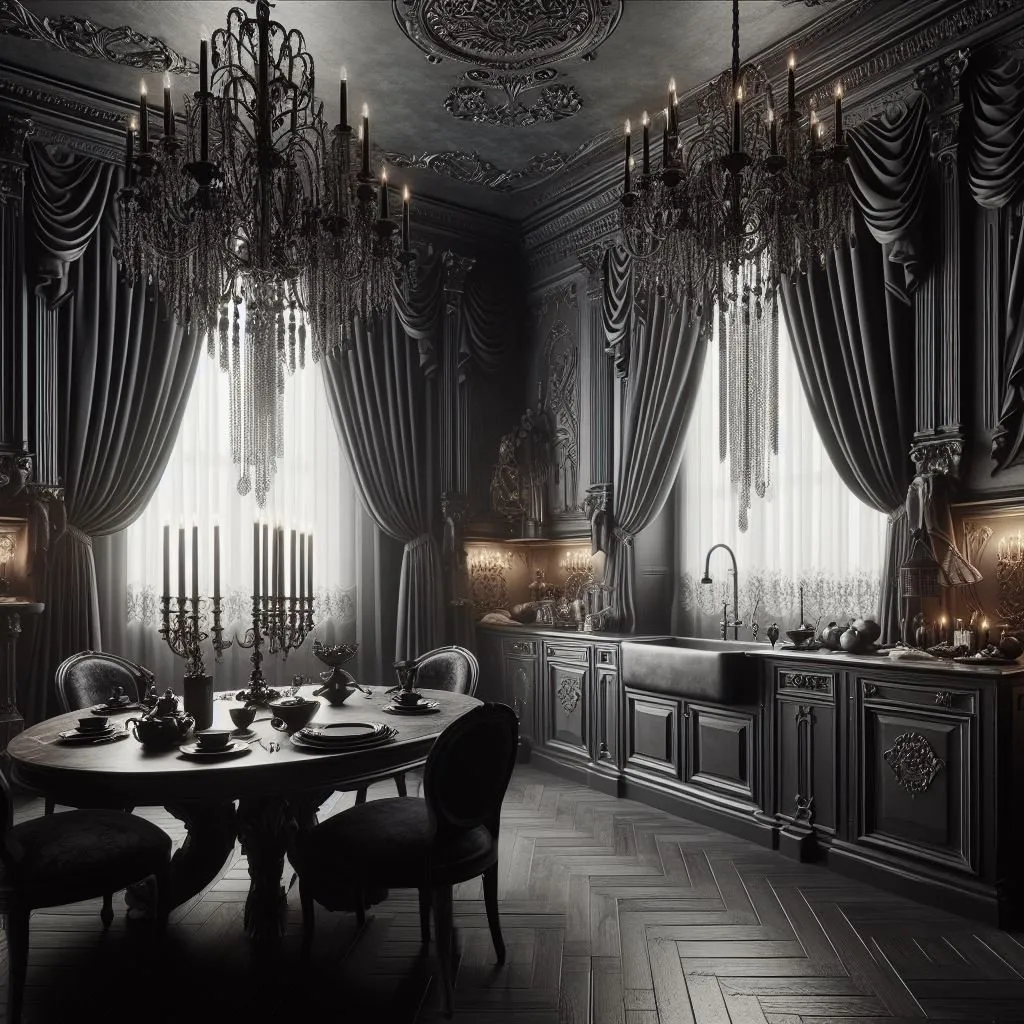
What Defines Gothic Kitchen Decor
Gothic kitchen decor is a striking design style, characterized by its dark, dramatic, and often opulent aesthetic. It draws inspiration from the architecture and artistic sensibilities of the Gothic period (roughly 12th to 16th centuries), known for its soaring arches, pointed windows, and intricate detailing. In the context of a kitchen, this translates into a space that evokes a sense of mystery, luxury, and timeless elegance. This design philosophy steers clear of the minimalism and bright spaces often seen in contemporary kitchens, embracing instead a world of rich colors, textures, and historical references. Understanding the core elements of Gothic style is the first step towards crafting a kitchen that authentically embodies this unique and captivating aesthetic.
Dark Color Palette for Gothic Kitchens
The heart of Gothic kitchen design lies in its distinctive color palette, which is predominantly dark and moody. This isn’t to say that the kitchen must be entirely devoid of lighter shades, but the foundation is undoubtedly built upon deep, rich tones that create an atmosphere of both drama and sophistication. The choice of colors sets the stage for the entire design, influencing the mood and overall ambiance of the space. It’s essential to select colors that complement each other and contribute to the desired aesthetic, creating a cohesive and visually stunning environment. Moreover, the careful consideration of lighting is vital to ensure that the colors are showcased effectively and the space doesn’t feel overly somber or closed in.
Using Black, Deep Reds, and Purples

Black is a cornerstone of Gothic design, used not only as a wall color but also in cabinetry, appliances, and accents. It provides a strong backdrop that enhances the richness of other colors and adds depth to the space. Deep reds, such as burgundy, crimson, and oxblood, bring warmth, passion, and a touch of regal elegance. These colors can be incorporated through accent walls, textiles, or decorative items. Purples, from deep violets to dark plums, add an element of mystery and sophistication, often found in soft furnishings, paint, or decorative accessories. The key is to balance these colors carefully to create a harmonious and visually appealing space. Use of these colors can be balanced by the use of mirrors and strategic lighting placement to counteract the darkness and create a vibrant yet classic atmosphere.
Incorporating Texture and Pattern
Beyond color, texture plays a crucial role in Gothic kitchen decor. The use of varied textures prevents the space from feeling flat and adds visual interest. Consider textured wallpapers or paint finishes, such as faux brick or stone effects, to add depth to the walls. Fabrics like velvet, brocade, and damask can be used for curtains, upholstery, or table linens, introducing a sense of luxury and tactile contrast. Patterns, such as intricate damasks, fleur-de-lis motifs, or gothic-inspired tile designs, can be used to elevate the design. Combining these elements allows you to create a space that is rich in visual interest and evokes the grandeur of the Gothic era. Layering different textures and patterns allows the design to feel complex, layered, and truly unique.
Embracing Stone and Exposed Brick
One of the defining characteristics of Gothic architecture is the use of stone and brick. In a Gothic kitchen, incorporating these elements can create a sense of timelessness and authenticity. Exposed brick walls, whether original or added as a design feature, provide a rustic, textural contrast to the smoother surfaces. Stone countertops or backsplashes can add a touch of luxury and natural beauty, while also contributing to the overall mood of the kitchen. If structural changes are not feasible, consider using faux stone panels or brick-effect tiles to achieve a similar aesthetic. These elements not only add visual appeal but also enhance the historical depth of the design, further immersing you in the Gothic aesthetic. It’s essential to consider the lighting in conjunction with these materials to showcase their texture and enhance their visual impact.
Adding Gothic Architectural Elements

To truly capture the essence of Gothic design, incorporating architectural details is essential. Arched doorways and windows are iconic elements of Gothic architecture, and if space and budget allow, these can be integrated into your kitchen. If altering the existing structure isn’t an option, consider adding arched mirrors, cabinet doors, or decorative moldings to mimic the look. Intricate woodwork, such as corbels, columns, or detailed trim, can further enhance the Gothic feel. The use of these architectural elements adds visual interest and creates a sense of depth, drawing the eye and creating a more immersive and authentically gothic atmosphere. The choice of hardware and finishes is also critical to ensure that these elements blend seamlessly with the rest of the design.
Consider Arched Doorways and Windows
Arched doorways and windows are key features of Gothic architecture, creating a sense of grandeur and visual interest. In a kitchen, these elements can transform the space, adding a touch of elegance and historical charm. If structural changes are possible, consider replacing rectangular doorways or windows with arched versions. This instantly elevates the aesthetic, creating a focal point that captures the eye. If major renovations are not feasible, you can simulate the look by installing arched mirrors or incorporating arched details in cabinet designs. This technique adds a visual flourish that subtly echoes the grandeur of Gothic architecture. To further enhance the effect, consider using dark-colored trim or frames to emphasize the arches, making them stand out and contribute to the overall theme.
Choosing Gothic-Inspired Furniture
The furniture in a Gothic kitchen should reflect the style’s emphasis on craftsmanship and ornate design. Dark wood is a common choice, and furniture pieces should ideally feature intricate carvings, detailed embellishments, or gothic-inspired motifs. The selection of furniture is crucial as it defines the style and character of the space. Think about the function, style and aesthetic value. Antique or reproduction pieces add to the historical depth of the design. A large, imposing dining table with a dark finish and carved legs can serve as a striking focal point. Consider upholstered chairs in luxurious fabrics like velvet or leather to add a touch of comfort and sophistication. The goal is to select pieces that are both functional and aesthetically pleasing, contributing to the overall mood of the kitchen.
Selecting Dark Wood and Ornate Pieces

Dark wood is a quintessential element of Gothic furniture. The rich, deep tones of woods like mahogany, walnut, or ebony create a sense of luxury and depth. When selecting kitchen furniture, prioritize pieces crafted from these materials, ensuring they fit the overall aesthetic. Cabinets with intricate carvings, detailed door panels, and ornate hardware are excellent choices. Consider a large, imposing dining table with a dark finish and carved legs to serve as a focal point. Complement the table with chairs upholstered in luxurious fabrics such as velvet, leather, or brocade. These materials add texture and comfort, enhancing the overall sophistication of the space. Ornate pieces with a history or a vintage feel can also make the kitchen more unique and appealing. The goal is to select pieces that have both practical and design value.
Adding Gothic Accents and Accessories
Accessories and accents play a crucial role in tying the whole design together. Gothic accents can infuse personality and enhance the overall theme. Choose decorative items that reflect the Gothic aesthetic. Candlesticks and candelabras, particularly those made of wrought iron or dark metal, add to the mood lighting. Antique mirrors with ornate frames can reflect light and enhance the sense of space. Decorative items such as antique keys, crucifixes, or religious symbols, if aligned with personal preferences, can be incorporated to deepen the Gothic feel. The use of these elements should be considered with careful attention to detail to maintain visual harmony. These are the things that make your kitchen truly unique, and reflects your personality and aesthetic preferences.
Choosing Candles, Candlesticks, and Chandeliers
Lighting is a key element in any Gothic kitchen, and candles, candlesticks, and chandeliers are perfect for establishing the atmospheric ambience. Incorporate a variety of candle holders, from small, individual candlesticks to elaborate candelabras, to create a layered lighting effect. Consider wrought-iron or dark metal finishes for a truly gothic look. Chandeliers, with their intricate designs and ambient light, are an essential component. Choose a chandelier with a dark finish or one featuring crystal elements to create a contrast. Position the chandelier above the dining table or kitchen island to create a focal point. This lighting style can be supplemented with dimmer switches to control the light and create a warm and inviting atmosphere, even during the day.
Incorporating Gothic Hardware

The hardware in a Gothic kitchen should complement the style, with ornate details and dark finishes. Choose cabinet knobs, pulls, and handles made of materials like wrought iron, antique brass, or pewter. Consider handles with intricate designs, such as fleur-de-lis or gothic arch motifs. The hardware should be carefully selected to enhance the aesthetic. The choice of hardware can dramatically influence the final look of the kitchen. It’s essential to consider the overall design and the hardware’s contribution to the atmosphere. The correct selection of hardware is one of the most important details to get right if you want to achieve the true aesthetic of the Gothic style. This will bring the whole design together, creating a feeling of authenticity and historical depth.
Kitchen Lighting with Gothic Touch
Lighting is crucial in a gothic kitchen, and it’s about more than just functionality. It’s about creating the right atmosphere and setting the mood. Combining a variety of lighting sources helps achieve this effect. Dim, warm light is preferable to bright, harsh lighting. Layering different types of lighting is crucial to create depth and atmosphere. Consider chandeliers, sconces, and recessed lighting that can be dimmed to control the intensity. The goal is to create a sense of mystery and intrigue, evoking the grandeur of the Gothic era while ensuring the kitchen remains functional and inviting.
Dark and Moody Lighting
Opting for dark and moody lighting is crucial to establishing the gothic aesthetic. This means avoiding harsh, bright lights in favor of warmer, softer illumination. Chandeliers, sconces, and pendant lights with dark metal finishes or intricate designs are perfect choices. Using dimmers can allow you to control the intensity of the light, creating the desired atmosphere. Candles and candle holders add a touch of romance and drama, providing a flickering, warm light. The goal is to create a sense of mystery and intrigue, evoking the grandeur of the Gothic era. Strategically placed lights, with warm-toned bulbs, can emphasize architectural features and textures, adding depth and visual interest to the space. This layered approach will enhance the overall mood and ambiance of the Gothic kitchen.
Embracing Gothic with Modern Appliances

While embracing the Gothic style, it’s important to integrate modern conveniences and appliances for a functional kitchen. The key is to find a balance between the aesthetic and the practical. Consider stainless steel or black appliances, which are very popular in contemporary kitchens, and their sleek designs can be successfully incorporated into a Gothic setting, particularly if they have a matte finish that aligns with the dark color scheme. If you want to hide the modern element, you can use panel-ready appliances. These can be covered with cabinet doors that match the rest of your kitchen’s aesthetic, allowing them to blend seamlessly with the Gothic decor. Integrating contemporary appliances while maintaining a Gothic aesthetic requires careful thought, and planning to achieve a well-balanced and stylish kitchen.
Integrating Contemporary Kitchen Elements
The goal is to find a seamless balance between the Gothic style and the modern conveniences. Consider stainless steel or black appliances, which are a good choice to integrate modern conveniences, especially with matte finish, that aligns with the dark color scheme. Alternatively, you can utilize panel-ready appliances that can be covered with cabinet doors matching the rest of the kitchen’s design, ensuring they blend seamlessly with the Gothic decor. Modern kitchen islands can integrate seamlessly, if they are made of dark wood or feature gothic-inspired carvings. The key is to think strategically about where you integrate modern elements. The secret is to ensure that the modern items do not clash with the Gothic aesthetic, and that the elements co-exist to create a harmonious and functional kitchen.
Maintaining a Functional Kitchen
While focusing on aesthetics, it is also essential to ensure that the kitchen remains functional and practical for daily use. This means considering the layout, storage, and workflow of the space. The design should not compromise the usability of the kitchen, despite the dramatic aesthetic. Ensure there is ample counter space for food preparation, adequate storage for appliances, and a logical arrangement of work zones. The right amount of lighting will also be necessary, as the dark atmosphere of a Gothic kitchen can require careful planning to ensure it is still well-lit and functional. Ultimately, your gothic kitchen should be a beautiful, dramatic, and practical space that you can enjoy on a daily basis.